


00/00
Datasets



Competition
Ended

NTIRE 2026 Challenges
Image restoration, enhancement and manipulation are key computer vision tasks, aiming at the restoration of degraded image content, the filling in of missing information, or the needed transformation and/or manipulation to achieve a desired target (with respect to perceptual quality, contents, or performance of apps working on such images). Recent years have witnessed an increased interest from the vision and graphics communities in these fundamental topics of research.
Ended
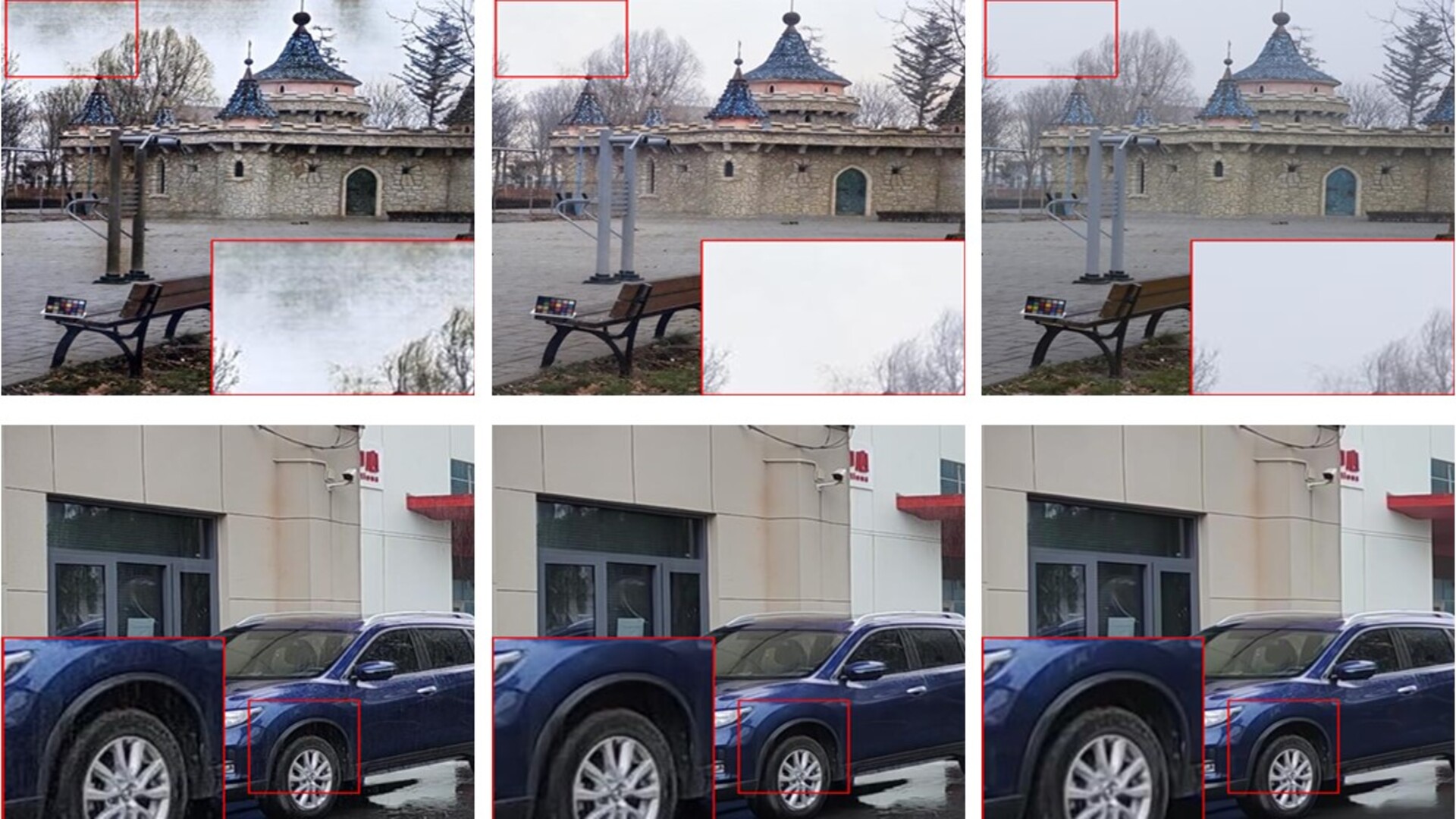
LoViF 2026 The Second Challenge on Real-World All-in-One Image Restoration
The 2nd Workshop on Low-level Vision Frontiers with Generative AI, Preference Optimization and Agentic Systems (LoViF) will be held in September 2026 in conjunction with ECCV 2026. Low-level vision is undergoing a paradigm shift. Traditional restoration methods are being augmented and redefined by Generative AI, Preference Optimization, and Agentic Systems.
Ended
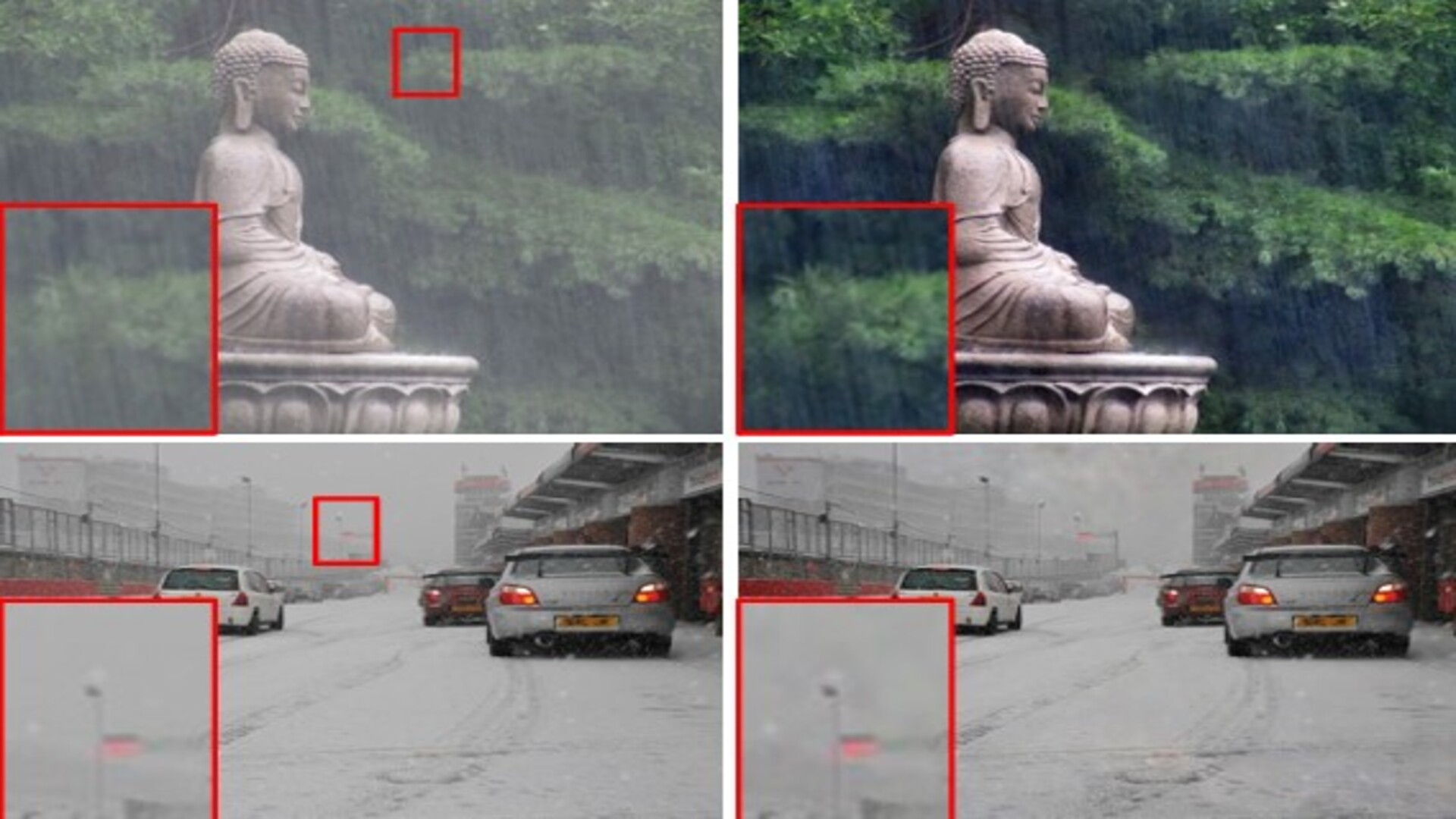
LoViF 2026 The Challenge on Unified Removal of Raindrops and Reflections
The 2nd Workshop on Low-level Vision Frontiers with Generative AI, Preference Optimization and Agentic Systems (LoViF) will be held in September 2026 in conjunction with ECCV 2026. Low-level vision is undergoing a paradigm shift. Traditional restoration methods are being augmented and redefined by Generative AI, Preference Optimization, and Agentic Systems.
Ended

LoViF 2026 Challenge on AIGC Image Compression Challenge
While image compression has advanced rapidly, most public benchmarks still emphasize natural images captured by cameras. That leaves a clear gap for AIGC content, where readable text, synthetic patterns, prompt-consistent structure, and stylized regions can be disproportionately damaged by compression artifacts even when conventional distortion metrics remain acceptable.
Journal

Pattern Recognition | Adaptive and Scalable Vision Models in Dynamic and Resource-Constrained Environments
In today’s rapidly evolving world, vision models are playing an increasingly crucial role in a variety of applications, including robotics, autonomous driving, healthcare, industrial automation, and environmental monitoring. However, these models often face challenges in dynamic, complex, and resource-constrained environments where data is noisy, incomplete, or continuously evolving.

GIScience & Remote Sensing | Remote Sensing in Cloudy and Rainy Environments: Challenges, Advances, and Applications
Cloudy and rainy environments are common in tropical, subtropical, and other regions frequently affected by cloud cover and rainfall. These challenging conditions pose significant obstacles to remote sensing data acquisition, processing, and applications, while also motivating innovation in methodologies and technologies.
IEEE JSTARS | Advances in Multimodal Transfer Learning for Remote Sensing: Theories, Methods, and Applications
Remote sensing is witnessing an unprecedented data revolution, marked by the explosive growth of heterogeneous Earth Observation (EO) data from diverse sensors—optical, SAR, LiDAR, hyperspectral, and thermal—across multiple resolutions.
IEEE JSTARS | Noise-Aware Remote Sensing: Modeling, Mitigation and Utilization
Recent interdisciplinary research reveals noise isn’t just a pollutant to remove—under control, it acts as a stimulus/explicit prior to boost model performance (refine decision boundaries, enhance privacy/robustness, support uncertainty quantification). However, existing studies lack a systematic "mitigation-stimulation-exploitation" framework and theoretical basis. This special issue solicits original research on noise-aware remote sensing to share advances and drive its development.